Dangerous Goods Storage Guide for Australian Sites


A leaking drum, a damaged aerosol carton or incompatible chemicals stored on the same rack can turn routine stockholding into a serious workplace incident. This dangerous goods storage guide sets out the practical controls Australian sites should use to store hazardous substances safely, limit spill impacts and support their compliance duties.
Storage is not simply about keeping products out of the way. The right arrangement protects people, prevents chemicals reaching drains or soil, reduces fire escalation and gives emergency responders clear information when seconds matter. The correct solution depends on the goods, their quantities, packaging, location and the activities taking place nearby.
Start with the dangerous goods classification
Before selecting a cabinet, store or spill pallet, identify exactly what is being stored. The Safety Data Sheet (SDS) is the working document for this task. It identifies the dangerous goods class, subsidiary risks, storage requirements, incompatibilities, personal protective equipment and spill response measures.
Australian dangerous goods are commonly classified under the Australian Dangerous Goods Code. For workplace storage, the relevant WHS legislation, state or territory requirements and applicable Australian Standards also need to be considered. A flammable liquid, corrosive acid, oxidiser and compressed gas may each demand very different controls. Treating every chemical as a general liquid creates avoidable risk.
Check the SDS and product label for the proper shipping name, UN number, dangerous goods class and packing group. Then record the maximum quantity held on site, including stock in warehouses, workshops, decanting areas and maintenance rooms. Small containers add up quickly, particularly where chemicals are purchased across several departments.
Separate incompatible materials
Compatibility is one of the most common weak points in dangerous goods storage. A cabinet may be well built and correctly labelled, but it cannot prevent a hazardous reaction if incompatible products have been placed together.
Flammable liquids should be kept away from ignition sources and substances that can intensify a fire. Oxidising agents require separation from fuels, oils, solvents and other combustible material. Acids and alkalis should generally be segregated to prevent violent reactions, while cyanides and sulphides must be kept away from acids due to the potential release of toxic gases. Refer to each SDS rather than relying on broad assumptions about a product category.
Physical separation can be achieved through dedicated cabinets, separate storage bays, distance, fire-rated barriers or purpose-designed chemical stores. The appropriate approach depends on the quantities involved and the site layout. Colour-coded labels and a current chemical register help staff maintain the system after deliveries, stocktakes and shift changes.
Do not use an unlabelled shelf or a spare corner of the warehouse as an overflow area. Overflow stock is often where incompatible chemicals, poor housekeeping and missing containment controls appear first.
Choose storage equipment for the actual hazard
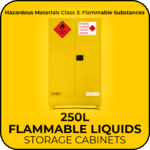
A storage solution needs to match the substance and its use, not just the container size. For example, a flammable liquids cabinet is designed to help manage the fire risk associated with Class 3 liquids. It is not a universal cabinet for every hazardous chemical. Corrosive substances may require a compatible corrosive goods cabinet or purpose-designed store, particularly where vapours or leaks could attack standard components.
When selecting equipment, assess these practical points:
- the dangerous goods class, SDS requirements and quantity to be stored
- whether containers are sealed stock, frequently accessed or decanted on site
- the available ventilation, ignition controls and clearances around the storage area
- the cabinet or bund’s chemical compatibility, load capacity and sump capacity
- access for inspection, stock rotation, spill response and emergency services.
For drums, intermediate bulk containers and larger packs, bunded pallets and floor bunding provide secondary containment. Their role is to retain a leak or spill before it reaches a drain, doorway or unprotected surface. The required capacity should be determined against the relevant regulatory and site requirements, including the volume of the largest container and the total volume stored.
Use materials that are compatible with the liquid. A polyethylene bund may be suitable for many chemicals, while steel equipment may be appropriate for oils and fuels but unsuitable for certain corrosives. Check chemical resistance before purchasing or relocating stock.
Build secondary containment into the layout
Secondary containment is a control, not a substitute for sound containers and handling practices. Drums should be inspected for corrosion, bulging, damaged bungs and leaking taps before they are placed into storage. A full bund cannot contain a new spill effectively, so remove accumulated rainwater, residue and rubbish promptly and manage contaminated liquids as required.
Position storage away from stormwater drains, pits and waterways wherever possible. If a drain cannot be avoided, ensure drain covers or drain protection equipment are readily available as part of the spill response plan. Chemical stores should also be protected from vehicle impact. Bollards, barriers and sensible traffic separation are particularly relevant in loading zones and busy warehouse aisles.
Keep access routes clear. Staff must be able to retrieve a container without climbing, moving unrelated stock or placing themselves beneath stored liquids. Heavy packs belong at low level, while frequently used products should be stored within safe handling reach. This reduces both spill likelihood and manual-handling exposure.
Control ignition sources and ventilation
Flammable liquids storage requires particular discipline. Keep ignition sources, hot work, sparks, flames and unsuitable electrical equipment away from the storage area. This includes forklifts, battery charging points, heaters and temporary work activities that may not have been present when the store was first established.
Ventilation needs to suit the products and the room. Vapours from some flammable liquids are heavier than air and can travel to an ignition source. Ventilation arrangements should not direct contaminated air into occupied areas, offices or neighbouring tenancies. Where ventilation or electrical classification is uncertain, obtain competent advice before changing the storage configuration.
Gas cylinders need secure upright storage where required, protection from physical damage and separation according to the gas type and site rules. Never assume a general storage cage is suitable for all cylinders. Fuel gases, oxidising gases and toxic gases have different hazards and may require dedicated arrangements.
Keep documentation and signage usable
Compliance documentation only works if people can use it during normal work and an emergency. Maintain an up-to-date chemical register and ensure SDS documents are accessible to workers. Labels must remain legible on containers, cabinets and storage areas. Replace labels that have been damaged by UV exposure, chemical residue or cleaning.
Emergency information should identify the goods held, key hazards, required PPE and initial response actions. Depending on the site, placarding, manifests and emergency plans may be required once specified quantities are reached. These thresholds and obligations vary with the jurisdiction, dangerous goods class and site circumstances, so confirm requirements with the applicable regulator or a qualified adviser.
The storage area should also have clear operating rules: who can access it, how stock is received, where decanting may occur, how damaged containers are isolated and who is authorised to arrange waste disposal. Written rules reduce reliance on memory and make training more consistent.
Match spill response equipment to the stored goods
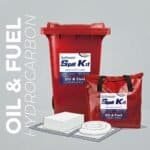
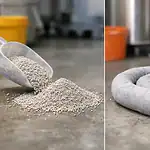
Every dangerous goods storage area should have an appropriate spill response arrangement nearby, but not so close that a spill makes the kit inaccessible. The contents must suit the liquids on site. General purpose absorbents may be effective for oils and coolants, while chemical absorbents are a better choice where acids, alkalis or unknown hazardous liquids are possible.
A practical response point commonly includes compatible absorbents, containment socks or booms, disposal bags, drain protection, gloves and other PPE identified by the SDS. For larger storage volumes, consider how a spill will be contained beyond the initial kit. Bunding, drain isolation and a clear escalation process are often more valuable than simply increasing absorbent quantity.
Train workers to raise the alarm, isolate the area, prevent a spill entering drains and use PPE before attempting clean-up. They should also know when not to intervene. Strong fumes, fire risk, an unknown substance or a spill beyond site capability requires escalation to emergency services or a specialist contractor.
Inspect, maintain and review the setup
Dangerous goods storage changes over time. New products arrive, departments relocate and old stock remains long after its intended use. A scheduled inspection identifies problems before they become incidents. Check container condition, labels, cabinet doors, bund capacity, housekeeping, access, expired stock and spill kit contents.
Review the setup whenever there is a spill, near miss, major stock change, new chemical or alteration to the building. The right answer may be additional containment, a separate cabinet, improved segregation or a change to purchasing practices that reduces hazardous stock on hand.
For operations teams, the most effective storage system is one workers can follow under pressure: clearly classified goods, fit-for-purpose containment, visible separation and spill equipment ready to use. Spillmaster supplies the practical storage, bunding and spill-control equipment that helps turn those controls into a workable site standard.