Laboratory Mercury Spill Example: What to Do First

A dropped mercury thermometer can turn a routine laboratory task into a contamination incident within seconds. This laboratory mercury spill example shows why the first response matters more than speed: elemental mercury breaks into mobile beads, enters cracks and can continue releasing vapour if it is handled poorly.
For laboratories, schools, technical facilities and maintenance teams, a mercury spill should be managed under a documented site procedure, the product safety data sheet (SDS) and applicable WHS and environmental requirements. The correct response depends on the amount released, the room’s ventilation, the surface involved and whether anyone may have been exposed.
Laboratory mercury spill example: a broken instrument
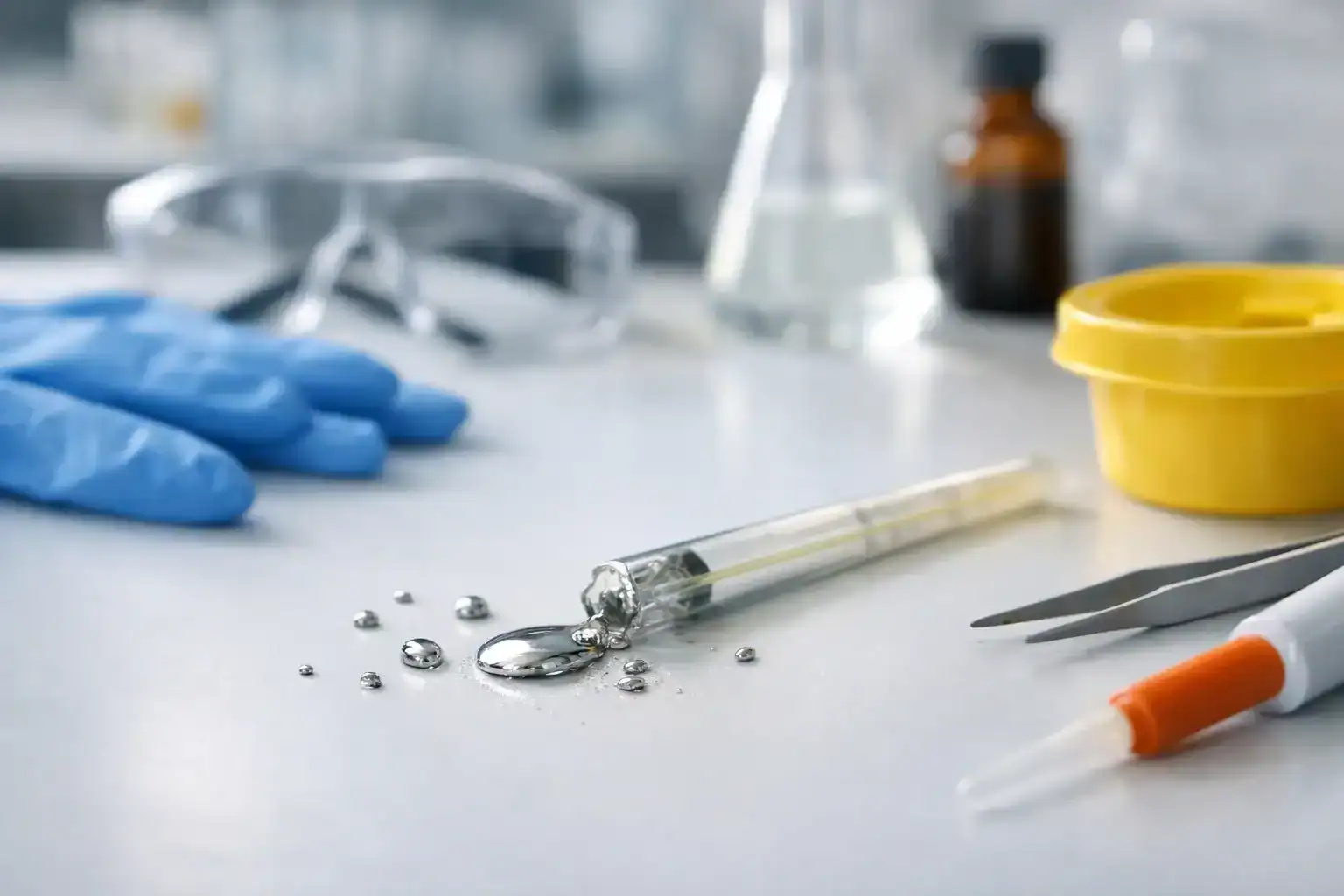
A technician knocks a mercury-containing thermometer from a bench. It breaks on a sealed vinyl floor and releases a small amount of liquid mercury, with visible beads spreading beneath the bench and towards a floor-wall junction. No one is injured, but two staff members are in the room.
The technician does not reach for a broom, mop, standard absorbent pad or vacuum cleaner. Those actions can disperse mercury into smaller droplets, drive it into joints and cracks, or increase vapour exposure. Instead, the technician alerts nearby staff, prevents access to the area and reports the incident to the laboratory supervisor or nominated emergency contact.
The room is isolated while the site assesses the spill. If this is a small, contained release and trained personnel have the correct mercury-specific response equipment, the spill may be managed under the site procedure. If mercury has entered drains, porous surfaces, cracks, equipment, heating or ventilation systems, or if the amount is uncertain, specialist hazardous materials support is generally the safer option.
This distinction is critical. A spill may look minor because the visible volume is small, yet the contamination area can be much larger than the original breakage site.
Make the area safe before collecting anything
The immediate objective is to stop people spreading contamination through the laboratory. Keep staff and visitors out, restrict access with signage or barricading, and remove unnecessary foot traffic from the area. Avoid walking through the spill zone or placing bags, trolleys and equipment nearby.
Where it can be done safely and in line with the site procedure, increase fresh-air ventilation to the area. Do not direct fans at the spill. Air movement across the floor can push mercury beads into hard-to-reach locations and may carry vapour beyond the initial zone.
The supervisor should identify the material involved before deciding on the clean-up method. Elemental mercury from an instrument requires a different response from a mercury compound, reagent or contaminated solution. Some mercury compounds carry additional chemical hazards and may require a chemical spill kit, different PPE, specialist advice and a separate waste stream.
A useful incident assessment records the source of the mercury, estimated quantity, exact location, type of flooring, nearby drains and cracks, people present, and actions already taken. This record supports follow-up monitoring, waste disposal and any required incident reporting.
Use equipment designed for mercury, not a general spill kit
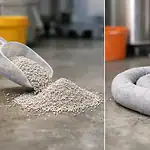
A general-purpose spill kit is valuable for many workplace liquids, but it is not automatically suitable for mercury. Standard pads, socks and loose absorbents may not collect beads effectively and can create a contaminated waste volume without resolving the source. Similarly, ordinary shop vacuums and domestic vacuum cleaners must not be used for mercury spills.
A mercury-specific spill kit is designed to support controlled collection of small elemental mercury spills by trained workers. The precise contents vary, but a suitable kit commonly includes PPE appropriate to the risk assessment, collection tools, a means of locating small beads, a mercury-binding powder or amalgamation agent where specified, sealed waste containers and clear instructions.
Before purchasing or deploying equipment, check that it suits the likely mercury source at your site. A kit intended for a small broken thermometer may not be appropriate for a damaged laboratory instrument, a spill in a drain channel or a release across damaged flooring. The SDS and internal emergency procedure remain the primary reference points.
PPE selection should also be risk-based. Gloves, protective clothing and eye protection may be needed to avoid contact with broken glass and contamination. Respiratory protection is not a substitute for isolation, ventilation and competent spill control. If respiratory protection is required, it must be selected, fitted and used under the site’s respiratory protection program.
Controlled collection of visible beads
Only trained, authorised staff should perform a small-spill clean-up. They should work methodically from the outer edge towards the centre, taking care not to scatter beads. Low-angle lighting can help identify mercury on smooth surfaces, especially around bench legs, skirting, floor joints and equipment feet.
Collected mercury, broken instrument fragments, used tools, contaminated PPE and any mercury-binding materials must go into compatible, clearly labelled sealed containers. Treat all collected material as hazardous waste. It should not be placed in general rubbish, clinical waste, a sharps bin or a drain.
The collection area should be checked again after visible material is removed. If beads cannot be accounted for, have reached an inaccessible space or remain visible after clean-up, stop work and escalate the incident. Repeated attempts with unsuitable tools often make a manageable spill harder and more costly to remediate.
When a small spill becomes a specialist response
Not every laboratory mercury spill should be handled internally. Escalate promptly where the release quantity exceeds the site’s trained-response limit, the spill has entered a drain, or the mercury has spread into cracks, carpet, porous material or machinery. The same applies when heating, ventilation or air-conditioning may have distributed vapour or contamination.
Specialist assessment is also appropriate if a person may have been exposed, if there is uncertainty about the chemical identity, or if the spill involves a mercury compound rather than elemental mercury. Do not rely on visual inspection alone to declare the area safe. Depending on the incident, air monitoring or contamination assessment may be required before normal laboratory work resumes.
The cost trade-off is straightforward. Keeping a mercury-specific kit and training available can reduce downtime for a small, well-contained release. But trying to manage a complex spill without the right equipment, authority or verification can create a larger exposure risk, extended closure and a more expensive clean-up.
Disposal, documentation and reopening the laboratory
Mercury waste requires disposal through an approved hazardous waste pathway. Store sealed containers securely, away from incompatible materials and where they cannot be knocked over or accessed by unauthorised people. Label the container clearly with its contents, hazard information and date, following site procedures.
After the response, document the incident while details are fresh. Record the release source, estimated quantity, people involved, containment actions, waste generated, any external support used and corrective actions. Review whether the instrument should be replaced with a non-mercury alternative, whether storage needs improvement, and whether the laboratory’s spill equipment is located close enough to the risk.
Reopen the area only when the responsible person is satisfied that clean-up, verification and documentation requirements have been completed. For more significant spills, that decision should be supported by competent hazardous materials advice or monitoring results.
A mercury incident is a practical test of laboratory readiness. Keep the response procedure current, train the people expected to use it, and ensure mercury-specific equipment is available before a breakage occurs – not after the beads have rolled under the bench.