Showing the single result
Aluminium Floor Bunding Spill Barriers
Spillmaster aluminium floor bunding provides a fixed, low-profile barrier for creating contained areas on workshop, warehouse and industrial floors. It can be used across suitable doorways, work areas and liquid handling zones where a permanent floor-level spill barrier is required.
▶ Read full specifications, compliance certificates & ordering info
Choose aluminium floor bunding according to the area being contained, the required layout, the liquids present and the type of traffic that may cross the barrier. The floor surface, installation method and sealing of joins and edges should also be considered when planning a permanent containment area.
Choosing Aluminium Floor Bunding
Aluminium floor bunding can be suitable where a fixed barrier is preferred to portable containment. Before installation, check the dimensions and specifications of the product against the intended site, traffic conditions and containment requirements. For other fixed and portable containment options, see our spill control and containment range.
Check the Site & Installation Requirements
Consider the floor condition, proposed barrier layout, vehicle and pedestrian movement, liquids being contained and how the bunding will be fixed and sealed. Product suitability and installation requirements should be confirmed for the particular application before installation.
Order Online Anytime — Even After Hours
Aluminium floor bunding can be ordered online 24/7 with delivery Australia-wide. For larger requirements or help assessing your application, contact Spillmaster for assistance.
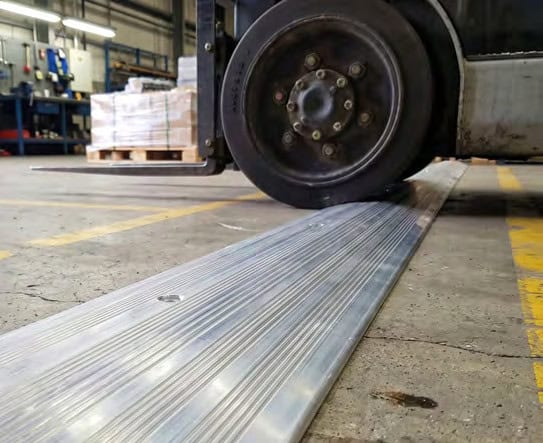
Aluminium Floor Bunding for Permanent Spill Containment
Aluminium floor bunding provides a fixed, low-profile barrier for creating contained areas on workshop, warehouse and industrial floors. It can be used where liquid needs to be contained within a defined area rather than allowed to migrate through doorways, across work areas or towards drains.
Because floor bunding becomes part of the working area, selection should consider more than containment alone. The floor surface, required layout, liquids present, vehicle and pedestrian movement and installation method should all be considered before deciding where and how the bunding will be installed.
Choosing Aluminium Floor Bunding
Aluminium floor bunding can be suitable where a permanent barrier is preferred to portable or temporary containment. Typical applications can include workshops, warehouses, liquid handling areas, doorways and other industrial locations where a fixed floor-level barrier forms part of the site's spill-control system.
Before selecting floor bunding, consider the dimensions of the area being contained and how the barrier will interact with normal site operations. If vehicles, forklifts, pallet-handling equipment or pedestrians will cross the bunding, check the product specifications and assess whether the proposed installation is suitable for that traffic.
Planning the Installation
The effectiveness of permanent floor bunding depends on the complete installation, including the condition of the floor and the treatment of joins, ends and fixing points. The proposed substrate should be assessed before installation and the bunding should be installed and sealed using methods suitable for the product, floor and liquids being contained.
For applications where fixed floor bunding is not appropriate, other forms of containment may be more suitable. See our spill control and containment range for portable bunds, spill pallets, barriers and other containment options.
Aluminium Floor Bunding FAQs
Where can aluminium floor bunding be used?
Aluminium floor bunding can be considered for workshops, warehouses, doorways, liquid handling areas and other industrial locations where a fixed floor-level containment barrier is required. Suitability depends on the floor, liquids, traffic and intended containment arrangement.
Can vehicles or forklifts cross aluminium floor bunding?
Where vehicle or forklift traffic is expected, check the dimensions and specifications of the particular floor bunding against the vehicles, loads, traffic frequency and installation conditions at the site. These factors should be assessed before installation rather than assuming one configuration is suitable for every traffic application.
Does aluminium floor bunding need to be sealed to the floor?
The interface between the bunding and floor is an important part of the containment system. Installation should account for the substrate, fixing points, joins and edges so liquid does not simply pass through gaps in the completed barrier. Follow the installation requirements appropriate to the product and application.
Can aluminium floor bunding be used around corners?
The required layout should be planned before installation, including corners, joins, wall interfaces and doorways. How these areas are formed and sealed depends on the product and installation, so confirm the appropriate method before cutting or modifying the bunding.
Is aluminium floor bunding suitable for every liquid?
Not necessarily. The liquid being contained should be identified before selecting a containment system. Check the suitability of the bunding, installation materials and any sealants or other components against the substances present at the site.